Destinations
Fiji Honeymoon Guide: Likuliku, Turtle Island & the Overwater Reality
Fiji is the South Pacific's value overwater destination and the soft-coral capital of the world — but it has fewer than 100 true overwater bungalows in the whole country. Here is Likuliku versus Turtle Island, the Mamanucas versus the Yasawas, and what the pictures don't tell you.
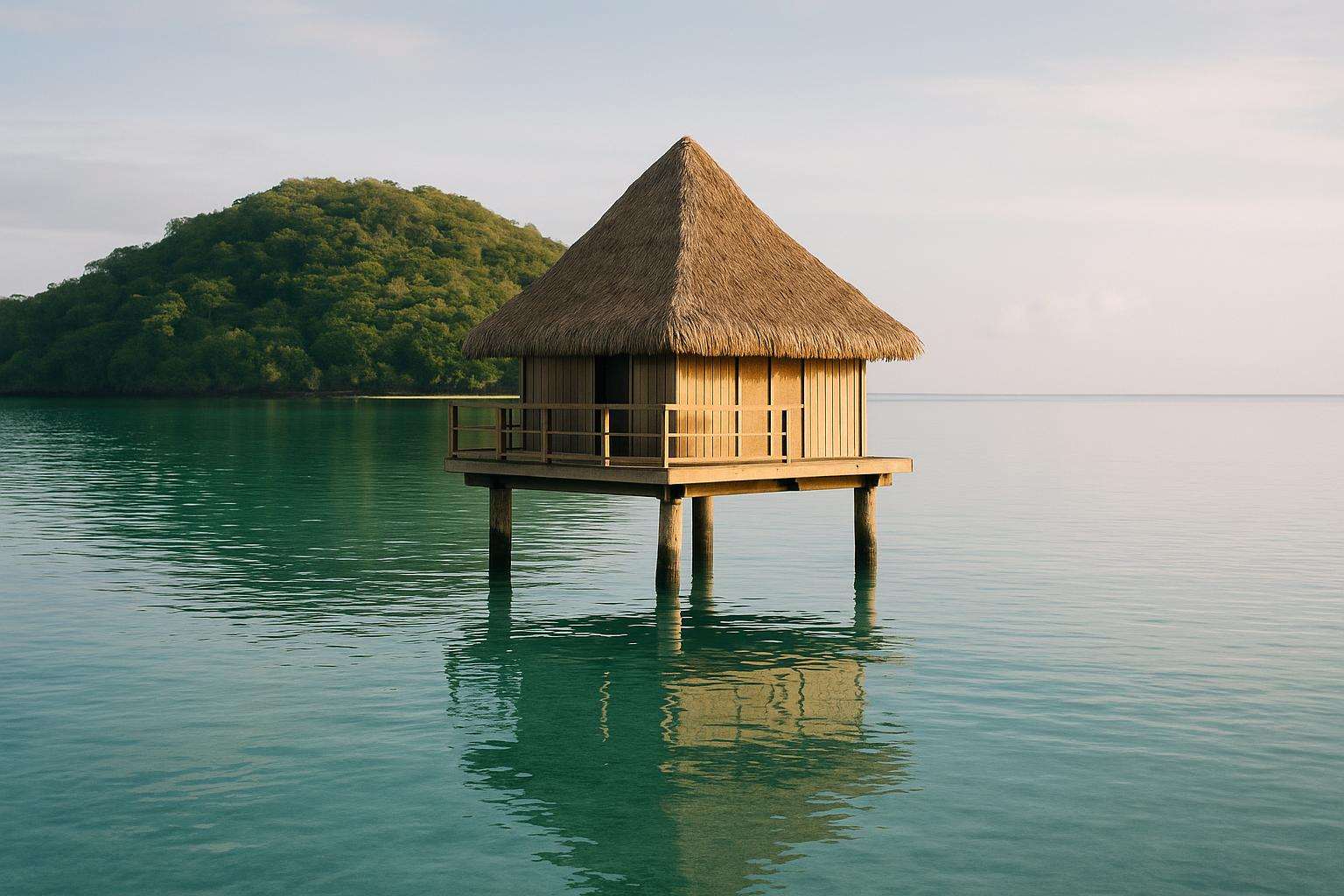
Fiji occupies a specific niche in the overwater-honeymoon conversation, and it is worth being precise about what that niche is. It is not the most photographed destination — that is Bora Bora, with Mount Otemanu behind the bungalows. It is not the deepest overwater market — that is the Maldives, with thousands of water villas. Fiji is the warmest welcome, the best value for long-haul South Pacific travelers, and the soft-coral capital of the world. It is also, crucially, a place with fewer than 100 true overwater bungalows in the entire country.
That scarcity is the honest reality behind the Fiji honeymoon, and it shapes every decision. Here is how the two flagship properties — Likuliku and Turtle Island — differ, how the Mamanuca and Yasawa island groups compare, and what the marketing photos leave out.
Why choose Fiji over Bora Bora or the Maldives?
Travel time is the sharpest practical differentiator. Fiji is roughly 11 hours nonstop from Los Angeles or San Francisco — about three hours more than Bora Bora, but a world easier than the 20-to-28-hour, multi-leg journey to the Maldives (usually via Dubai, Doha or an Asian hub). For couples on the West Coast, Fiji is a single overnight flight to a place where daily life runs in English, which removes a real layer of friction.
On value, Fiji leads. Its premier overwater resort, Likuliku, lists rates from around $1,759 AUD per night — roughly $1,150 to $1,250 USD — including three gourmet meals daily, a better food-inclusive proposition than most comparably priced Bora Bora or Maldives rooms, where dining is often a large a la carte add-on. And on marine life, Fiji holds a distinction all its own: as the soft-coral capital of the world, its reefs — around the Bligh Water, the Somosomo Strait, and the Great Astrolabe Reef off Kadavu — carry a density and vibrancy of soft coral unmatched anywhere on Earth. Learn more through Tourism Fiji.
Likuliku Lagoon Resort: Fiji's only true overwater bures
Likuliku Lagoon Resort, on Malolo Island in the Mamanuca group, holds a distinction no other Fijian resort can claim: it operates the country's only authentic overwater bures — ten units of 91 square meters each, positioned over a fringing reef inside a protected marine sanctuary. The resort is adults-only, 100 percent Fijian-family-owned, and certified as a sustainable tourism operator; the bures are built from locally sourced coconut-palm timber and woven pandanus under thatched roofs that provide natural insulation. Each has a deep-set stone bathtub with lagoon views, a private deck with a ladder into the ocean, complimentary snorkel gear, and a glass floor with underwater lights for night fish-watching.
Rates start around $1,759 AUD per night, inclusive of three gourmet meals daily. When you factor in the per-couple daily food cost at comparable a la carte properties, the effective rate is competitive with similarly positioned Maldivian resorts. TripAdvisor reviewers repeatedly call it one of the most exceptional resorts they've stayed at, singling out staff warmth; regulars recommend requesting bure 1 or 2 for the best position. It is reached from Nadi International Airport by 25-km catamaran, private water taxi, seaplane, or helicopter (helicopter round-trip runs about $700).
Turtle Island: the private-island alternative
If Likuliku is about the overwater bure, Turtle Island is about the private island. This 500-acre estate in the northern Yasawa group operates as an all-inclusive resort limited to just 14 couples at a time, each assigned a personal Bure Mama and Bure Papa. It is famous as the filming location of the 1980 film The Blue Lagoon, and its entire model is seclusion — private-beach picnics, an all-inclusive rate covering meals, drinks and most activities, and a deliberately tiny guest count that means you may have a beach entirely to yourselves.
The accommodation here is beach-bure luxury, not overwater — an important distinction for couples fixated on the stilt-house image. What Turtle Island offers instead is a level of privacy and personal service that a larger resort cannot replicate, on a remote island reached by seaplane from Nadi. Choose it for the private-island experience and the seclusion; choose Likuliku if the overwater bure itself is the dream.
Mamanuca vs. Yasawa: where to base your honeymoon
| Island group | Distance from Nadi | Character | Flagship resort |
|---|---|---|---|
| Mamanuca | Short catamaran or 10–15 min flight | Convenient, calmer lagoons | Likuliku (overwater bures) |
| Yasawa | Longer boat or seaplane | Remote, dramatic volcanic scenery | Turtle Island (private island) |
Both groups sit off the western coast of the main island, Viti Levu, and reach guests from Nadi International Airport. The Mamanucas are closer and more convenient, which is why they host Likuliku; the Yasawas run farther north, feel more remote, and deliver the soaring volcanic landscapes that Turtle Island trades on. For a first Fiji honeymoon centered on the overwater bure, base in the Mamanucas. For maximum seclusion and scenery, choose the Yasawas — or pair the two across a longer trip.
Timing and honest tradeoffs
The dry season, May through October, is the ideal window: lower humidity, less rain, calmer seas for diving and transfers. The wet season, November through April, is warmer and greener but overlaps the South Pacific cyclone season; off-season travel can secure real discounts if you'll accept occasional showers. Likuliku enforces a three-night minimum from December 15 to January 6.
The honest weaknesses are worth naming. Fiji's overwater design is simpler and more traditional than the Maldives' — no water slides or retractable roofs, and that is arguably the point, but manage expectations if you've seen Maldivian marketing. Transfers add cost and time; a seaplane or helicopter to the outer islands is not incidental. And the overwater scarcity means Likuliku's ten bures book out far in advance for peak dates. But for couples who want soft-coral diving, an authentic Fijian welcome, a value-for-quality overwater experience, and more than the resort perimeter to define their honeymoon, Fiji is the South Pacific island that rewards you for going a little farther.
Frequently asked
How does Fiji compare to Bora Bora and the Maldives for a honeymoon?
Fiji is the value and accessibility pick of the three, especially for warmth of welcome and English-speaking ease. It is roughly 11 hours nonstop from Los Angeles or San Francisco — about three hours longer than Bora Bora, but far shorter than the 20-plus-hour multi-leg journey to the Maldives. Its premier overwater resort, Likuliku, starts around $1,150 to $1,250 USD per night including three gourmet meals daily, a better food-inclusive value than most comparably priced Bora Bora or Maldives rooms. Fiji is also the soft-coral capital of the world, so its diving and snorkeling are exceptional. The tradeoff: Fiji has far fewer true overwater bungalows and less dramatic villa design than the Maldives.
What is special about Likuliku Lagoon Resort?
Likuliku, on Malolo Island in the Mamanuca group, holds a distinction no other Fijian resort shares: it operates the country's only authentic overwater bures — ten units of 91 square meters each, built over a fringing reef inside a protected marine sanctuary. It is adults-only, 100 percent Fijian-family-owned, and certified as a sustainable operator, with bures built from locally sourced coconut-palm timber and woven pandanus under thatched roofs. Each bure has a deep stone bathtub with lagoon views, a private deck with a ladder into the ocean, complimentary snorkel gear, and a glass floor with underwater lights for night fish-watching. Rates start around $1,759 AUD (roughly $1,150 to $1,250 USD) per night, including three gourmet meals daily. Reviewers consistently rank the staff among the warmest anywhere.
What is Turtle Island Fiji and how is it different from Likuliku?
Turtle Island is a 500-acre private island in the northern Yasawa group, run as an all-inclusive resort limited to just 14 couples at a time, each assigned a personal Bure Mama and Bure Papa. It is famous as the filming location of the 1980 film The Blue Lagoon, and its model is total seclusion — private-beach picnics, an all-inclusive rate covering meals, drinks and most activities, and a deliberately small guest count. The key difference from Likuliku is format: Turtle Island is beach-bure luxury on a remote private island focused on exclusivity and personal service, not overwater accommodation. It reaches guests by seaplane from Nadi. Choose Turtle Island for privacy and the private-island experience; choose Likuliku for the overwater bure itself.
Should I stay in the Mamanuca or the Yasawa Islands?
Both are island groups off Fiji's western Viti Levu coast, reached from Nadi International Airport, and they differ mainly in distance and character. The Mamanucas are closer to Nadi — a short catamaran or a 10-to-15-minute flight — which makes them the more convenient choice and home to Likuliku on Malolo Island. The Yasawas stretch farther north, a longer boat or seaplane transfer, and feel more remote and dramatic, with soaring volcanic landscapes; Turtle Island sits here. For a first Fiji honeymoon prioritizing convenience and the overwater bure, the Mamanucas win. For maximum seclusion and scenery and willingness to travel farther, the Yasawas deliver. Many couples pair the two.
When is the best time to go to Fiji, and what should couples know about the seasons?
The Fijian dry season, roughly May through October, is the ideal window — lower humidity, less rain, and calmer seas for diving and boat transfers. This is also the cooler, more comfortable stretch. The wet season, November through April, is warmer and greener but coincides with the South Pacific cyclone season, which runs November through April; off-season travel can secure meaningful discounts for couples willing to accept occasional rain showers. Likuliku applies a minimum three-night stay from December 15 to January 6. Practically, book dive-focused days in the dry season for the best water clarity over Fiji's famous soft-coral reefs, and confirm transfer logistics — catamaran, water taxi, seaplane or helicopter — before you arrive.