Destinations
Bush & Beach: The Safari + Island Combo Honeymoon Itinerary
The 'bush and beach' honeymoon pairs an East African safari with an Indian Ocean island — Serengeti to Zanzibar, Maasai Mara to Mombasa. Here is how to sequence it, what it costs, and the health planning it demands.
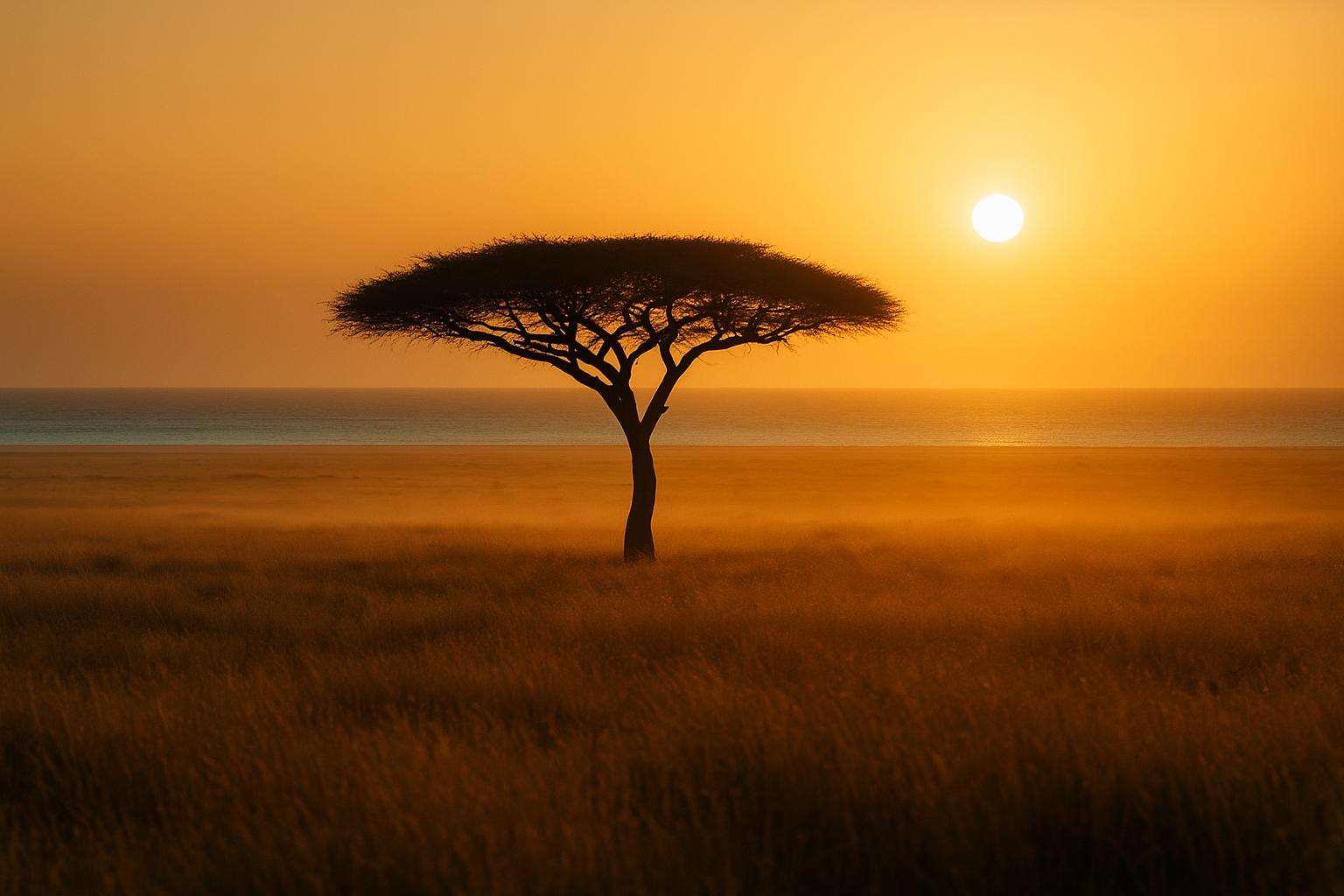
The first time I flew from a Serengeti airstrip to Zanzibar, the transition took barely two hours and rearranged my whole sense of the day. In the morning I had watched a lioness move her cubs across the short grass; by afternoon I was standing ankle-deep in the warm Indian Ocean, dust still on my boots back at the lodge. That contrast — the intensity of the bush resolving into the stillness of the beach — is the entire argument for the bush-and-beach honeymoon, and it is why travel specialists across Kenya and Tanzania build it as their default.
A bush-and-beach honeymoon pairs an East African safari with an Indian Ocean island or coastal beach. The classic routings are Serengeti to Zanzibar and Maasai Mara to Mombasa, with Mozambique's archipelagos as the seclusion-seeker's alternative. This guide covers how to sequence it, what the camps and transfers actually cost, and — because this is genuine health territory — the malaria and vaccination planning it demands.
Why the safari comes first and the beach comes last
The sequencing here is not a matter of taste — it is dictated by the rhythm of the two experiences. A safari is intense: game drives start before dawn, the days are full, and three or four days of it is deeply satisfying without blurring together. You want to arrive for that while you still have wedding-week energy. The beach, by contrast, is where a honeymoon wants to resolve. Ending in Zanzibar or on the Kenyan coast sends you home rested rather than road-worn, and it happens to match the flight geography, since the island is the onward leg from the safari airstrips.
A reliable ratio is four nights on safari and six on the beach for a ten-night trip, or three-and-seven if you want a longer island finale. The safari half can be short precisely because it is so concentrated; the beach half wants at least five or six nights because island transfers consume arrival and departure days. With fourteen nights, add a second safari region — the Maasai Mara plus the Serengeti, or Amboseli's Kilimanjaro views — or a reset night in Nairobi to break up the journey.
The classic routings
Serengeti to Zanzibar is the marquee Tanzania combination. The Serengeti is Africa's largest protected ecosystem and holds the world's densest lion populations; the Grumeti and Lamai corridors intercept the Great Migration without the vehicle congestion of the central Seronera area. From the northern Serengeti airstrips, a short flight reaches Zanzibar, whose north-coast beaches run around 28°C in the June–September dry season and whose Stone Town, spice farms and dhow sailing add Swahili-Omani culture to the sand. Tanzania Odyssey and other specialists build this as a signature product — see the routing logic on Tanzania Odyssey's honeymoon page.
Maasai Mara to Mombasa is the Kenyan equivalent. Light aircraft hop from Nairobi to the Mara in about 45 minutes; after the safari, a flight to the Kenyan coast opens the Diani Beach resort strip near Mombasa. The Mara's rolling savanna and July–October river crossings deliver the drama; the coast delivers the decompression. Mozambique's archipelagos — the Bazaruto and Quirimbas — are the seclusion alternative: barefoot-luxury island lodges with far fewer visitors, though they require more transfer time and pair more naturally with a southern-Africa safari than an East African one.
What the camps and combos cost
Safari pricing spans a wide range, and the beach half stacks on top. Per Tanzania specialists, a full ten-night Northern Circuit safari plus a Zanzibar beach extension runs roughly $3,500 per person at mid-range camps, about $6,800 per person at upper-mid camps, and around $9,500 per person for a luxury fly-in version. The honeymoon promotions move these numbers meaningfully: andBeyond runs a 50 percent discount on one partner's accommodation for the duration of a stay, and several camps run shoulder-season savings windows.
| Tier | 10-night safari + Zanzibar (per person) | Representative feel |
|---|---|---|
| Mid-range camps | ~$3,500 | Comfortable tented camps, shared game drives, quality beach hotel |
| Upper-mid camps | ~$6,800 | Private-conservancy access, better guiding, boutique beach resort |
| Luxury fly-in | ~$9,500+ | Exclusive-use camps, private vehicle, top-tier island villa |
Two cost notes couples miss: the internal flight between the safari and the island is a genuine line item, not a rounding error, and private-vehicle hire on safari adds $250–$400 per day above the camp rate. Shoulder-season travel — April to May in East Africa — cuts camp rates by 20 to 50 percent at the same properties, though it overlaps Zanzibar's longer rains, so weigh the beach half carefully.
The health planning you cannot skip
This is where a bush-and-beach honeymoon differs sharply from a European or Caribbean one, and where I urge couples to plan deliberately rather than casually. See a travel-medicine specialist six to eight weeks before departure — some vaccines need that window to reach full effectiveness, and yellow fever must be given at least ten days before entry to endemic-risk countries to be valid.
All of sub-Saharan Africa carries chloroquine-resistant Plasmodium falciparum, the most dangerous malaria species, and the CDC recommends prophylaxis for the Serengeti, Maasai Mara and Zanzibar alike — the authoritative reference is the CDC Yellow Book chapter on African safaris. Per CDC and Cochrane review analysis, atovaquone-proguanil (Malarone) and doxycycline are the best-tolerated regimens; atovaquone-proguanil has the shortest post-travel tail — seven days versus twenty-eight — and the fewest neuropsychiatric events, which is why many specialists favor it for a short honeymoon. From a functional, root-cause perspective, drug selection matters: if you have a history of gut dysbiosis, or are on hormonal birth control (which can reduce doxycycline absorption), atovaquone-proguanil is often the better-tolerated choice — but that is a conversation for your physician, not a self-prescription. There is no validated herbal substitute for pharmaceutical prophylaxis in high-transmission Africa. Layer in permethrin-treated clothing, DEET or picaridin repellent at dawn and dusk, and treated bed nets, which reputable camps supply as standard.
Couples who cannot take prophylaxis — pregnancy is the common reason — should build the safari half around South Africa's malaria-free reserves (Madikwe, the Waterberg, Welgevonden), which carry full Big Five wildlife without malaria risk, then pair with a Mozambique or Indian Ocean beach. And do not skip evacuation coverage: AMREF Flying Doctors covers air evacuation within East Africa for about $40 per person for 30 days, but it does not cover Southern Africa and does not repatriate home — layer it with a comprehensive policy carrying at least $250,000 in evacuation. Finally, malaria symptoms can appear up to a year after return: any fever in that window is a medical emergency, and you must disclose your travel history.
This section is editorial and not personal medical advice. Plan a safari honeymoon's health preparation with a qualified travel-medicine or infectious-disease physician, and never start, stop or change a prescribed medication without medical guidance.
When to go
The sweet spot is June through September, when the Serengeti and Maasai Mara are in prime game-viewing season — the Great Migration river crossings typically peak late July through August — and Zanzibar's north coast is dry, warm and calm. That both halves peak in the same window is what makes the Serengeti-to-Zanzibar routing so seamless. The catch is peak-season pricing and lead time: the small camps of 8–15 tents sell out twelve to eighteen months ahead. Book early, plan the health piece early, and you will have the honeymoon that starts with a lioness in the grass and ends with your feet in the Indian Ocean.
Frequently asked
What is a bush-and-beach honeymoon?
A bush-and-beach honeymoon combines an African safari — the bush — with an Indian Ocean island or coastal beach stay. It is East Africa's signature honeymoon structure because the geography makes it easy: after a few days of game drives in the Serengeti or Maasai Mara, a short flight drops you on a white-sand island like Zanzibar for pure decompression. The safari delivers the once-in-a-lifetime wildlife spectacle and early-morning intensity; the beach delivers the rest and romance a honeymoon wants to end on. It is the classic example of a split-stay, and travel specialists across Kenya and Tanzania build it as a default because the two halves complement each other so cleanly.
How many days do you need for a safari and beach honeymoon?
Plan on ten nights minimum to do both halves justice. A well-balanced structure is four nights on safari and six on the beach, or three-and-seven if you want a longer island finale. The reason the safari half can be as short as three or four nights is that game-drive days are intense and start before dawn — many couples find that three full days of drives is deeply satisfying and that a longer stint blurs together. The beach half wants at least five or six nights because island transfers eat arrival and departure days. If you have fourteen nights, add a second safari region or a night in Cape Town or Nairobi to break up the transfer. Ending on the beach is almost always the right arc.
Do you need malaria pills for a safari and beach honeymoon?
For most East African safari-and-beach itineraries, yes — this is genuine YMYL territory, so plan it with a travel-medicine physician six to eight weeks before departure. All of sub-Saharan Africa carries chloroquine-resistant Plasmodium falciparum, and the CDC recommends prophylaxis for the Serengeti, Maasai Mara and Zanzibar. Per CDC and Cochrane review analysis, atovaquone-proguanil (Malarone) and doxycycline are the best-tolerated regimens; atovaquone-proguanil has the shortest post-travel tail and the fewest neuropsychiatric events, which is why many specialists favor it for short trips. Non-drug prevention matters just as much: permethrin-treated clothing, DEET or picaridin repellent, and treated bed nets. Couples who cannot take prophylaxis — for example during pregnancy — should build the safari half around South Africa's malaria-free reserves instead. Never stop a prescribed regimen without medical guidance, and treat any fever within a year of return as an emergency.
Is Zanzibar the best beach for a Tanzania safari honeymoon?
Zanzibar is the default and for good reason: it is a short flight from the Serengeti's airstrips, its north coast beaches run around 28°C in the June–September dry season, and it layers Swahili-Omani culture — Stone Town, spice farms, dhow sailing — on top of the sand. That said, it is not the only option. Mombasa and the Kenyan coast pair naturally with a Maasai Mara safari and offer the Diani Beach resort strip. For couples wanting the most remote, low-density island finale, Mozambique's archipelagos — the Bazaruto and Quirimbas — deliver barefoot-luxury lodges with far fewer visitors, though they require more transfer time and pair more naturally with a southern-Africa safari. Zanzibar wins on convenience and culture; Mozambique wins on seclusion.
What does a safari and beach honeymoon cost?
It varies widely by tier. Per Tanzania specialists, a full ten-night Northern Circuit safari plus a Zanzibar beach extension runs roughly $3,500 per person at mid-range camps, about $6,800 per person at upper-mid camps, and around $9,500 per person for a luxury fly-in version. Kenya safari-and-beach packages start in a similar range. The biggest levers are camp tier, season, and the honeymoon promotions: andBeyond runs a 50 percent discount on one partner's accommodation for the duration of a stay, which materially changes mid-tier economics, and several camps run shoulder-season savings windows. Shoulder-season travel — April to May in East Africa — cuts rates by 20 to 50 percent at the same properties. Internal flights between the safari and the island are a real line item; budget them explicitly.
When is the best time for a Serengeti-to-Zanzibar honeymoon?
The sweet spot is June through September, when the Serengeti and Maasai Mara are in prime game-viewing season — the Great Migration river crossings typically peak from late July through August — and Zanzibar's north coast is in its dry season with warm, calm Indian Ocean water. That alignment is what makes the Serengeti-to-Zanzibar routing so clean: both halves are at their best in the same window. The tradeoff is that this is peak season for pricing and the small camps sell out twelve to eighteen months ahead, so book early. For better value with still-excellent wildlife, the April–May shoulder cuts camp rates significantly, though it overlaps Zanzibar's longer rains — a real consideration for the beach half.